
Cytogenetics Assessments of Traditional Medicine Majun using Plant Bioassay
Keywords:
Vigna radiata, cytogenetics; Majun; Traditional medicine.Abstract
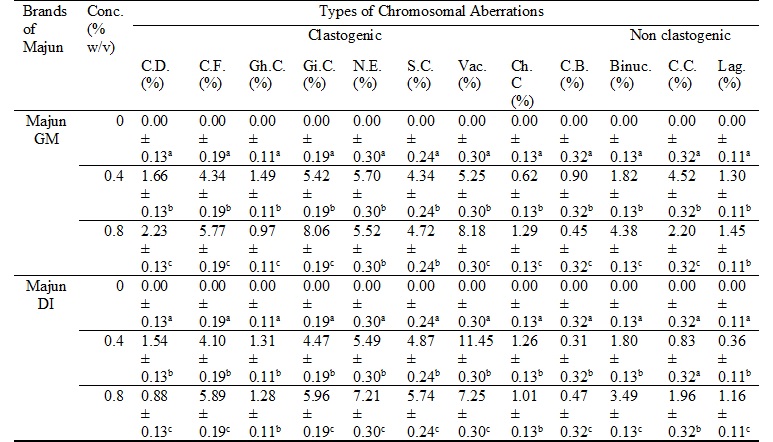
In recent years, local people have become more invested in maintaining health through the consumption of traditional medicine. However, due to the public’s lack of knowledge on the negative effects that could result from the majun’s ambiguous ingredients, the impact of this sort of medication on dividing cells, specifically on the chromosome, needs to be addressed. This study was conducted using the Allium test method but substituted with Vigna radiata (mung bean) to assess cytogenetics effects of two famous local traditional medicines called majun. The effects of majun exposure on V. radiata were analyzed based on the mitotic index and condition of chromosomes in 24 and 48 hours of treatments. It was discovered that as the exposure time increased, the percentage of mitotic index also increased which suggests cell proliferation. The percentage of chromosomal aberration also increased simultaneously to the increases of majun concentration of the two selected brands. Vacuolization (11.45±0.30%) and giant cells (8.06±0.19%) were the most common aberration reported in 24 hours of exposure, while nuclear erosion (10.78± 0.50%) and clumped chromosome (9.02 ± 0.34%) were the most frequent abnormalities identified in 48 hours of treatment. Both of tested majun have been confirmed to be lethal on the test organism (mung bean) regardless of the brands thus may possess a threat to human health.
Published
How to Cite
Issue
Section
License
Copyright (c) 2023 AMCS PRESS

This work is licensed under a Creative Commons Attribution-ShareAlike 4.0 International License.











