Empowering the Financial Wellbeing of Malaysian Youth During The Economic Uncertainty Due to Covid-19 Crisis
Keywords:
Financial wellbeing; Youths; Spending pattern.Abstract
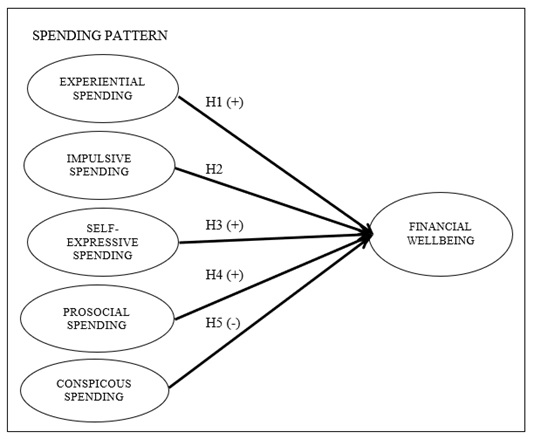
This study aimed to determine the effect of spending patterns, namely experiential, impulsive, self-expressive, prosocial, and conspicuous, on the financial wellbeing of youths in Malaysia. This study employed a quantitative approach. Data were collected from a sample of 400 youths, aged 18 to 24, using an online questionnaire. Data were analysed using Multiple Regression. The findings revealed experiential and impulsive spending as significant and positive predictors of financial wellbeing. Thus, the financial wellbeing of the youths can be realized with the increase in experience and impulsive spending despite economic uncertainty. Accordingly, the findings provide useful information to fuel youths to develop good spending habit that consequently improves their financial wellbeing, oneself and Malaysian economics, and helps the relevant parties to explore plausible solution and plan on the right lever to overcome financial problems and high indebtedness.