
Autonomous UV Disinfection with Image-Based Navigation for Bio-Contaminated Air and Surfaces
Keywords:
UV sanitization; autonomous. Microcontroller; Disinfection.Abstract
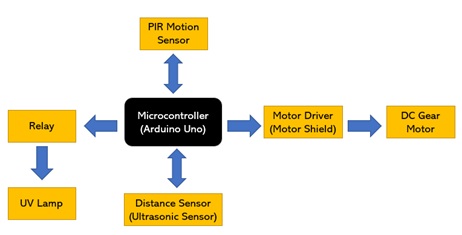
The Covid-19 virus transmission has resulted in extensive steps to prevent and interrupt viral transmission. Therefore, based on Wireless Sensor Technologies, this study proposes to create a UV sanitization robot with multipurpose applications and low cost. A microprocessor drives this UV robot model, which is linked to smartphone apps like Blynk. This robot design now includes additional functionality such as disinfection process monitoring, obstacle detection, and person detection. UV robot's functional performance in determining surface area disinfection in two distinct floor layouts, the accuracy of its sensor in a specified distance of enclosed area, and effect of UV light in two different axis locations were observed and tested. The results of UV robot performance in the experiments are the position of UV lamp in two different axis positions is not affecting the surface area in the process of UV sanitizing but the process of UV sanitization in different floor layouts is affected. This robot can detect obstacles 15cm away and detect human presence. The findings of UV robot performance in the studies show that the location of the UV lamp in two distinct axis positions has no effect on the surface area in the process of sanitizing, but the process of UV sanitization in different floor layouts is influenced.
Published
How to Cite
Issue
Section
License
Copyright (c) 2023 AMCS PRESS

This work is licensed under a Creative Commons Attribution-ShareAlike 4.0 International License.











