Optimization of AC-PKS with Imidazole and Tetraethylenepentamine using Response Surface Methodology
Keywords:
AC-PKS; Imidazole; Iodine number; RSM; TEPA.Abstract
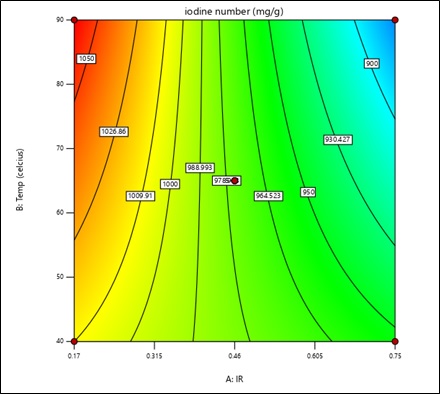
Carbon capture and storage (CCS) is the most mature technology to capture from flue gas stream through adsorption process. The commercial adsorbent though efficient is cost inhibitive. An alternative adsorption approach is by utilizing a palm kernel shell (PKS) as adsorbents. To enhance the adsorption capacity of , impregnation with Tetraethylenepentamine (TEPA) and imidazole (Ims) were introduced to increase the selectivity and capacity of . The response surface methodology (RSM) technique was utilized to optimize the process condition for preparation of modified activated carbon palm kernel shell (AC-PKS). The main process variables for this study were impregnation ratio (TEPA: Ims) and impregnation temperature. The 2 Factorial 1 model was developed for iodine number which was selected as the investigated response. The optimum conditions for modified AC-PKS had been identified to be an impregnation ratio 0.17 and temperature of 90°C which gave a maximum of iodine number 1027.58 mg/g. Experiment and model predictions were in good agreement. Scanning electron microscope (SEM), Fourier transform infrared (FT-IR), and elemental analysis (EA) analyses were used to further characterize modified AC-PKS. Hence, this modified AC-PKS produced will be tested for application of adsorption from the simulated flue gas.
Published
How to Cite
Issue
Section
License
Copyright (c) 2022 AMCS PRESS

This work is licensed under a Creative Commons Attribution-ShareAlike 4.0 International License.