
Implementing Lean Warehousing to Reduce Waste at SME Bandol Sandal’s in Banyumas, Indonesia
Keywords:
Lean; Sandals; SME; Warehouse, 5s.Abstract
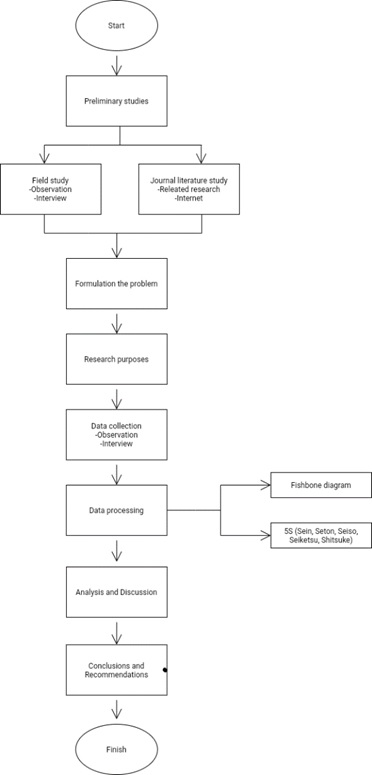
In Indonesia, SMEs grow and maintain well. One of the SME is XYZ which produces bandol sandals. The sandal is made from old tires. They face a problem due to a lack of warehouse capacity considering the high number of unsold products. Therefore, this study aims to analyze the efficiency of warehouse capacity and arrangement so that can operate optimally. The method used is qualitative with a lean management approach. A fishbone diagram was used to find causality from Money, Environment, Materials, Methods, and Man. This research implemented 5S (Seiri, Seiton, Seiso, Seiketsu, Shitsuke) to conduct the solutions. The results show the main issues are unlimited production (Methods), exceed raw material (Environment), decrease raw material quality (Material), production cost (Money), and different opinions (Man). The purpose solutions are leaving unnecessary goods (Seiri), arranging the necessary items to make them easier to find (Seiton), cleaning the workplace and machine tools regularly (Seiso), maintaining and achieving environment rules (Seiketsu), and providing counseling time to comply with the discipline rule in SMEs XYZ (Shitsuke). Further recommendations for the SME are to control the amount of production, provide pallet arrangements to the warehouse, and provide lines or boundaries between the stations of the warehouse area.
Published
How to Cite
Issue
Section
License
Copyright (c) 2022 AMCS PRESS

This work is licensed under a Creative Commons Attribution-ShareAlike 4.0 International License.











