Creativity and Innovation of Sand: A Short Review
Keywords:
Creativity; Innovation; Sand; Rock; Minerals.Abstract
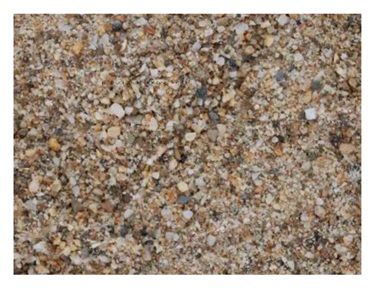
In 2020 the worldwide anthropogenic mass outweighed all of Earth's living biomass. Sand, gravel, and crushed rock, together called creation aggregates institute the large percentage of the anthropogenic mass and are the maximum extracted strong substances through mass. Sand is a granular fabric composed of finely divided rock and mineral particles. Sand has various compositions but is described by means of its grain size. Sand grains are smaller than gravel and coarser than silt. Sand can also confer with a textural class of soil or soil kind, i.e., a soil containing more than 85 percent sand-sized particles by means of mass. Sand is essentially manufactured from unconsolidated granular materials together with either rock fragments or mineral particles or oceanic materials. It is far specifically manufactured from silicate minerals and silicate rock granular particles. Sand composed of various materials that fluctuate depending on place, sand comes in an array of colours such as white, black, green, or even red. The most common element of sand is silicon dioxide within the form of quartz. The earth's landmasses are made up of rocks and minerals, such as quartz, feldspar, and mica. This paper will review the creativity and innovation in sand.
Published
How to Cite
Issue
Section
License
Copyright (c) 2023 AMCS PRESS

This work is licensed under a Creative Commons Attribution-ShareAlike 4.0 International License.