Effect of Increased Rainfall on Dengue Hemorrhagic Fever in South Kalimantan
Keywords:
Rainfall; Dengue Hemorrhagic Fever; Spread; Weather; Infectious.Abstract
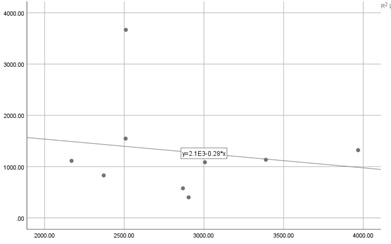
The environment is one of the factors that play a role in the emergence and spread of Dengue Hemorrhagic Fever (DHF). Climate change can have an influence on infectious disease patterns and an increased risk of transmission. Dengue hemorrhagic fever (DHF) has become endemic in Indonesia. DENGUE disease that occurs today is one of the public health problems in South Kalimantan that is closely related to weather factors. The purpose of this study is to find out the influence of climate change, namely rainfall with cases of Dengue Hemorrhagic Fever (DHF) in South Kalimantan. The results showed that high rainfall can increase the spread of Dengue Hemorrhagic Fever in South Kalimantan. From this study it can be known that increased rainfall can increase the number of cases of Dengue Hemorrhagic Fever (DHF).
Published
How to Cite
Issue
Section
License
Copyright (c) 2022 AMCS PRESS

This work is licensed under a Creative Commons Attribution-ShareAlike 4.0 International License.