Students’ Interpretation Ability in the Context of Visual Representation: A Case Study of Male and Female Students
Keywords:
Interpretation ability; Visual representation; Mathematics; Students.Abstract
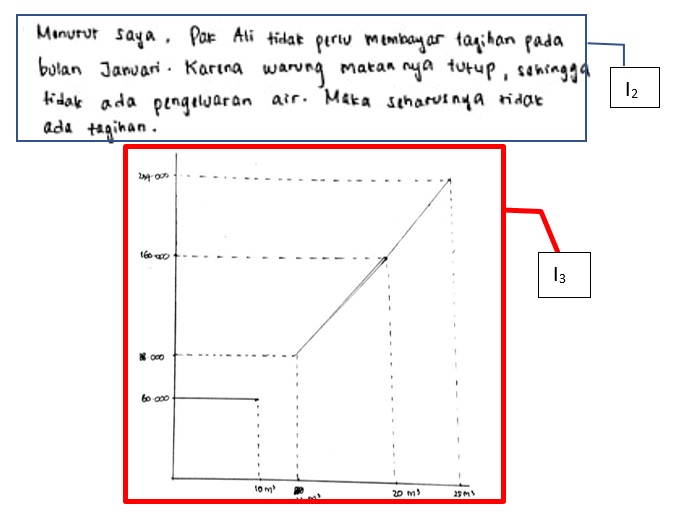
Interpretation ability relates to the ability to interpret and reflect on mathematical solutions, construct and communicate explanations in the form of arguments and evaluate two or more representations in relation to problem situations. This study focuses on describing the interpretation ability of male and female students in the context of visual representations. Namely graphical and table representation. The subjects of this study were 2 grade IX junior high school students, 1 male and 1 female. The research instrument is a task-based interview (interpretation ability test). The results showed that both male and female students could identify and recognize two line graphs with different scales originating from the same data, and could interpret the data in tabular form. Male and female students can also explain each interpretations of their proposed representations. Male students are superior in converting table representation into graphic form, while the graphical representation proposed by female students are less complete and detailed.